
Punta Uva Beach: Snorkeling, Swimming & What to Know
Punta Uva is the beach most people picture when they think of Caribbean Costa Rica: a forested headland, two sheltered bays of turquoise water and a reef a short swim from the sand. It is also the one that rewards a little planning — on the right morning it is perfect, on the wrong one it is just a pretty beach.
Punta Uva in one minute
- Where: about 8 km south of Puerto Viejo town on the coastal road, between Playa Chiquita and Manzanillo.
- Why go: the calmest, clearest water on this stretch of coast, and a reef you can reach without a boat.
- Cost: free. There is no park gate and no entry fee.
- Guide needed? No — unlike Cahuita National Park, independent snorkeling is fine here.
- Best time of day: early morning, before the wind picks up and the car parks fill.
The two bays and the trail over the point
Punta Uva is a headland, not a single beach. A forested point pushes out into the sea with a sheltered bay on each side, and signs off the coast road mark more than one access — including one for Punta Uva Arrecife. They all lead to the same stretch of sand either side of the point, so don’t worry about picking the “right” turnoff.
A short trail climbs over the point between the two bays. It takes roughly 5 to 15 minutes depending on how often you stop, with a steep section where a rope helps, and at the base there is a natural rock tunnel that waves wash through on livelier days. Wear proper sandals rather than flip-flops; the roots and rocks get slippery after rain.
Snorkeling the reef
The reef starts close to shore around the point and along the rocky sides of the bay. You walk in from the sand, swim out a few minutes, and you are over coral heads with parrotfish, sergeant majors and the occasional ray. The rule that works: stay near the rocks and the edges of the bay rather than in the open water in the middle, where there is mostly sand.
- Gear: locals rent snorkel gear and kayaks at the beach in high season, but bringing your own mask that fits is the single biggest upgrade.
- Currents: water can pull around the tip of the point. Stay inside the bay and swim back before you tire.
- Hazards: sea urchins live in the rocks and the reef is shallow in places. Water shoes help; never stand on the coral.
- Sunscreen: a rash guard is kinder to the reef than a layer of lotion.
For how Punta Uva compares with the bigger reef at Cahuita and the wilder water at Manzanillo, see our full snorkeling guide.
When to go
Punta Uva is condition-dependent, and the 48 hours before you arrive matter more than the month on the calendar. After several days of swell the water turns cloudy; after two or three calm days it can be glass-clear.
- September–October and around March–April usually bring the flattest sea on this coast.
- December–January has more windy days and northern swell, so plan Punta Uva for whichever mornings come up calm rather than a fixed date.
- Time of day: before 10 am the water is calmer, the light is better and you will have space. By late morning on a peak-season weekend it can feel busy.
Season-by-season detail is in the best time to visit Puerto Viejo.
Swimming and a beach day
On most days Punta Uva is the calmest swimming beach in the Puerto Viejo area, which makes it the easy choice with children or anyone who prefers to float rather than fight waves. The almond and palm trees behind the sand give real shade — a big deal by midday.
Bring water and cash. Facilities are basic, there is no lifeguard, and the food is a short walk back toward the road rather than on the beach itself.
Where to eat
- Selvin’s — a family-run Caribbean kitchen known for rondón, the slow-cooked coconut seafood stew. It does not open every day, so check before you plan around it.
- Arrecife — Afro-Caribbean plates and cold drinks right off the sand, open from breakfast to dinner.
More options, including the town favourites, in our Puerto Viejo restaurant guide.
Getting there and parking
- Bike: the classic way. The coast road is paved and mostly flat; allow 30–40 minutes from town and stop at Cocles and Playa Chiquita on the way.
- Taxi: 10–15 minutes from town, typically $5–8 one way. Agree the price before you get in and ask the driver to come back at a set time.
- Bus: the Puerto Viejo–Manzanillo bus runs along the coast road through the day and stops at the Punta Uva turnoffs.
- Car: small parking areas sit at the end of the access roads. They fill by late morning on busy days, so arrive early and leave nothing visible in the car.
Not renting a car? Puerto Viejo without a car covers bikes, taxis and bus times in detail.
Where to base yourself
Staying right at Punta Uva means beautiful mornings and a taxi or bike for every dinner in town. Staying in town means noise at night and a ride south for the best water. Most visitors land somewhere in between — our where-to-stay guide lays out each area honestly.
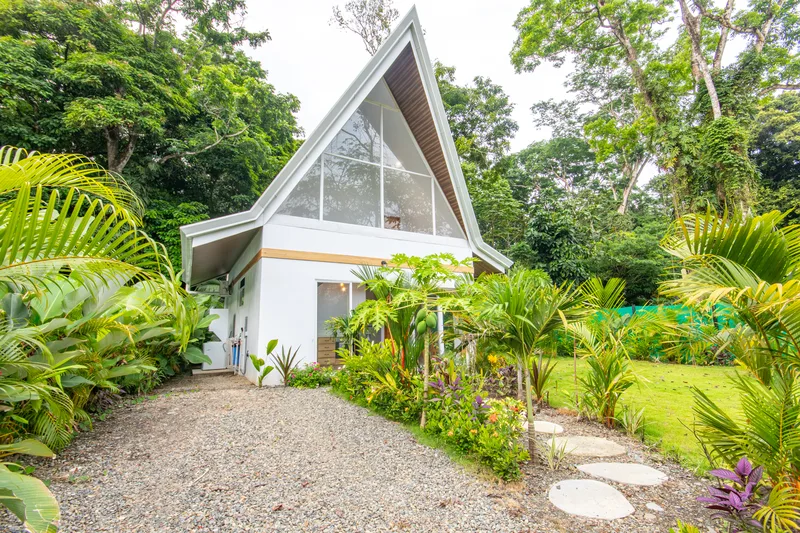
Crystal Jungle Villa sits on the quiet jungle fringe near Playa Negra, north of town: a 15-minute walk to the black-sand beach, 10 minutes by taxi to restaurants, and 15–20 minutes by car to Punta Uva on the mornings the sea goes flat.
FAQ
Is Punta Uva good for snorkeling?
Yes, on calm days. The reef sits close to shore around the point and along the rocky sides of the bay, so you can walk in from the beach. After a few days of swell the water clouds up, so check conditions and go early in the morning.
Do I need a guide to snorkel at Punta Uva?
No. Punta Uva is not inside a national park, so you can snorkel independently with your own or rented gear. That is the main difference from Cahuita National Park, where snorkeling is only allowed with a certified guide.
How far is Punta Uva from Puerto Viejo?
About 8 km south of town on the paved coastal road — 10–15 minutes by taxi or 30–40 minutes by bike. The Puerto Viejo–Manzanillo bus also stops at the Punta Uva turnoffs.
Is Punta Uva safe for swimming?
It is the calmest swimming beach in the area on most days, which is why families like it. Currents can still pull around the point, the rocks are slippery and there are sea urchins near the reef, so stay inside the bay and wear water shoes on the rocks.
What is the best time of year to visit Punta Uva?
The flattest water usually comes in September and October and again around March and April, but daily conditions matter more than the month. Any time of year, go in the morning after a couple of days without big swell.
Is there parking at Punta Uva?
There are small parking areas at the end of the access roads, and they fill up by late morning on peak-season weekends. Arrive early, and never leave valuables in the car.
Related guides
- Snorkeling in Puerto Viejo — Punta Uva vs Cahuita vs Manzanillo, gear and safety
- Puerto Viejo beaches — every beach on the coast road, compared
- Where to stay in Puerto Viejo — town, Playa Negra, Cocles or Punta Uva
- Manzanillo & Gandoca refuge — the end of the road, 5 km further south
- Best restaurants in Puerto Viejo — including Selvin’s and Arrecife at Punta Uva
- Puerto Viejo without a car — bikes, taxis and the Manzanillo bus